SFOS Newsletter
Fall 2007
FEATURED STUDENT: Lisa Kamin
CORRECTION: Please note that this is a corrected version of my interview with Lisa in the Fall 2007 SFOS Newsletter. The italicized sections below are the corrected sections.
Lisa Kamin, M.S. Fisheries
by Carin Bailey, SFOS Public Information Officer
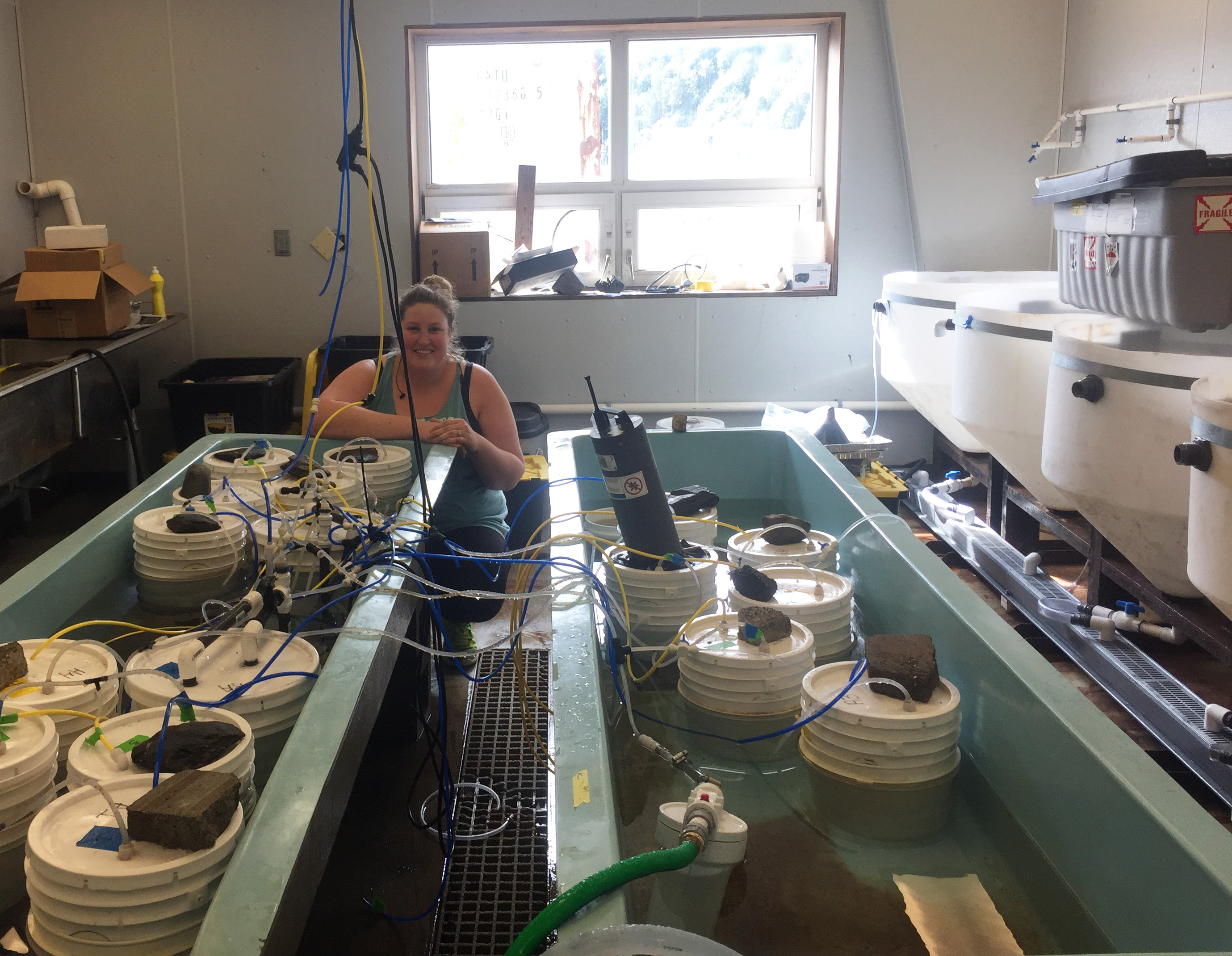
Lisa Kamin loves learning. She is driven to learn as much as she can about fisheries, not for the sake of the science itself, but because she wants to use the knowledge she gains to help people. Lisa is a master’s student studying the genetics of Pacific ocean perch (POP) with advisor Tony Gharrett at the Juneau Center of UAF SFOS. She has an impressive academic record as both a master’s student and as an undergraduate at the University of Miami. Below is a transcript of an interview I had with Lisa:
When did you know you wanted to study marine science?
I’ve always loved the ocean. I lived in Australia and in California when I was little and I loved being by the ocean when I was there. Later in elementary school, I went to the IMAX movie called “The Living Sea” and I just thought it was amazing. I was probably about ten years old. I always wanted to study marine biology. I really liked science and I thought the ocean was just really interesting.
Why did you decide to study fisheries?
Actually, I didn’t really decide on fisheries. I was looking around for graduate schools and I knew I wanted to go into genetics. I’m interested in genetics and how genetics can be applied to real world applications. I found Tony (Gharrett) and the project he had was really interesting.
I also like the field of fisheries because it’s not just some esoteric branch of science where you research some animal that no one ever uses or no one ever even knows about. These fish are really important—they’re economically important, they’re ecologically important. And it’s really neat being able to research something that matters in people’s everyday lives.
What exactly are Pacific ocean perch, anyway?
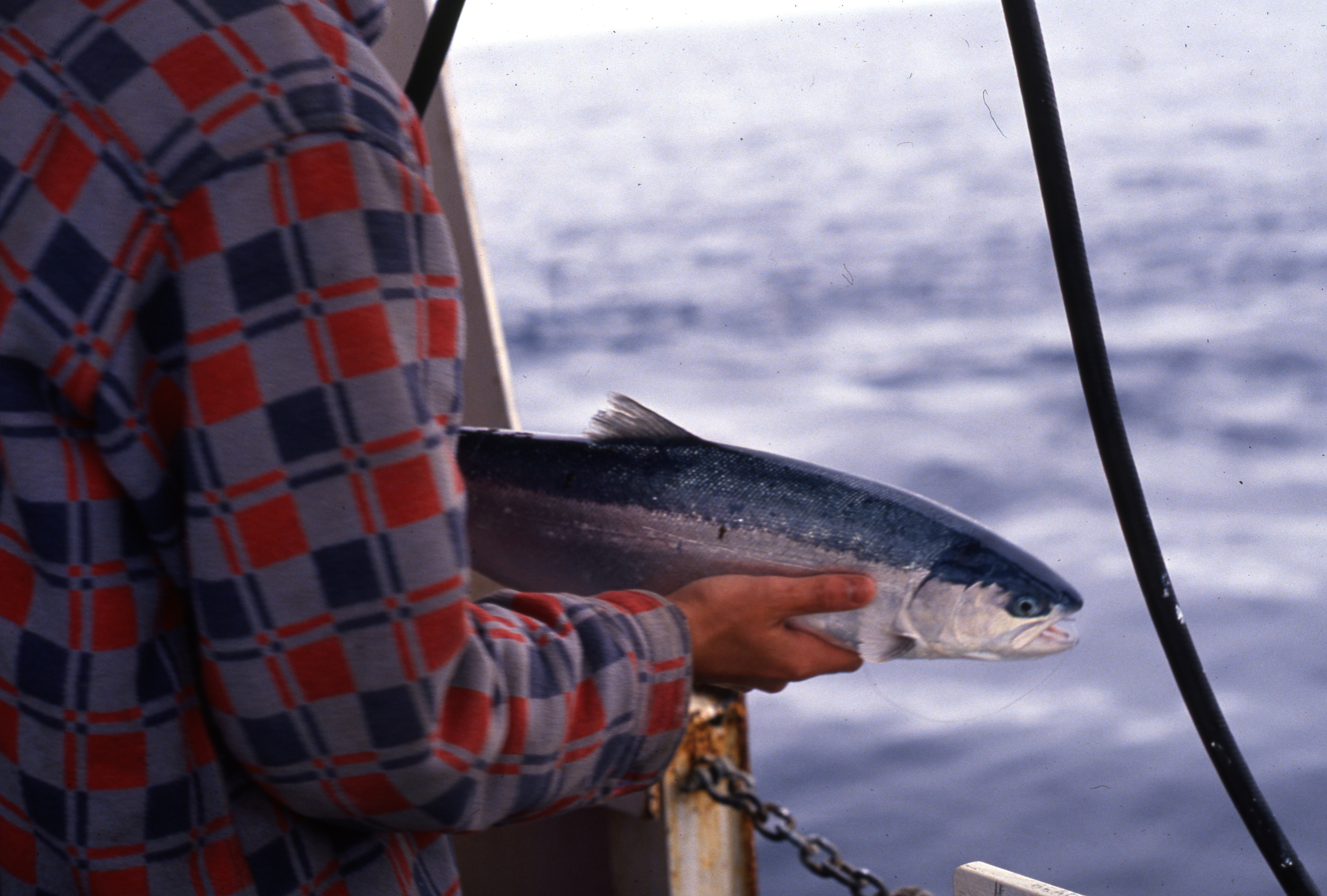
Even though I worked with POP tissue samples for nearly two years in our lab, I just saw my first POP this summer! We were on a NOAA trawl survey from Seward to Ketchikan. It was really great. In our lab, we joke that all our fish come in tubes. I’d never seen a whole POP before.
To answer your question, POP are actually rockfish. They are the dominant species in slope rockfish assemblages. There are about 100 species of rockfish worldwide and we have about 30 species in Alaskan water. POP live in really deep water so they are hard to study. They are very abundant and we hope to use them as a model for other rockfish species so we could apply some of our results to managing other rockfishes. It’s important to manage these species for continued productivity.
I’m curious about something. When I go to restaurants, I don’t usually see perch on the menu. Why is that?
That’s because POP are not really perch. They are misnamed. Red rockfish species often appear on menus as something like red snapper. Also, POP are very commercially important in the Asian market. A lot of our catch is sold overseas.
What is it about science that you like so much?
I love that there is so much that we don’t know. There is always something new to explore and every question you ask leads to another question. I love learning.
You have been a very successful student. Do you have any advice for incoming students?
Make sure you do something you love. It’s easy to do well if it is something you are passionate about. Choose well. It could be a very long program if you aren’t passionate about what you’re studying.
What does your future hold?
I don’t know yet. There are a lot of options. I might stay and do my Ph.D. with Tony. The samples we collected this summer would actually be for that project. I haven’t decided. My long-term goal is to get my Ph.D. but I am also really interested in science education. I also like working with kids and art.
According to Tony Gharrett, Lisa has a bright future no matter what she pursues. He says that she always challenges herself intellectually while also always being ready to help others in her lab. “She is a joy to have in my lab,” he says. Lisa began her master’s program at UAF in 2005.
She is the American Fisheries Society Juneau Sub-unit President and has been involved with the group since coming to UAF. She plans on receiving her M.S. in May 2008.
- Back to Fall 2007 Newsletter